Thomas Ewing
Architecture + Design
Thomas Ewing
Architecture + Design
Thomas Ewing
Architecture + Design


Church Farmhouse
Location: Southrepps, Norfolk
Role: Principle Designer + Heritage Consultant
Stage/Service: Survey, Planning Permission, Listed Building Consent
Typology: Grade II Listed, Conservation Area, AONB
Scale: 221m²
Year/Status: 2025
Church Farmhouse
Location: Southrepps, Norfolk
Role: Principle Designer + Heritage Consultant
Stage/Service: Survey, Planning Permission, Listed Building Consent
Typology: Grade II Listed, Conservation Area, AONB
Scale: 221m²
Year/Status: 2025
Church Farmhouse
Location: Southrepps, Norfolk
Role: Principle Designer + Heritage Consultant
Stage/Service: Survey, Planning Permission, Listed Building Consent
Typology: Grade II Listed, Conservation Area, AONB
Scale: 221m²
Year/Status: 2025
Church Farmhouse
Location: Southrepps, Norfolk
Role: Principle Designer + Heritage Consultant
Stage/Service: Survey, Planning Permission, Listed Building Consent
Typology: Grade II Listed, Conservation Area, AONB
Scale: 221m²
Year/Status: 2025
Church Farmhouse
Location: Southrepps, Norfolk
Role: Principle Designer + Heritage Consultant
Stage/Service: Survey, Planning Permission, Listed Building Consent
Typology: Grade II Listed, Conservation Area, AONB
Scale: 221m²
Year/Status: 2025
Church Farmhouse is a Grade II listed Georgian property at the centre of Southrepps’ historic core, surrounded by a cluster of significant agricultural and ecclesiastical buildings. This project focused on updating key living spaces and carrying out essential conservation works.
The internal alterations centred on improving day-to-day functionality while keeping historic fabric loss to an absolute minimum. The kitchen, pantry, and utility rooms, housed in the 19th-century rear addition, are reorganised to make better use of the vaulted spaces. The shared family bathroom is reconfigured to create a more practical layout, and the conversion of the fifth bedroom into an en-suite for the principal bedroom resolves long-standing amenity shortcomings.
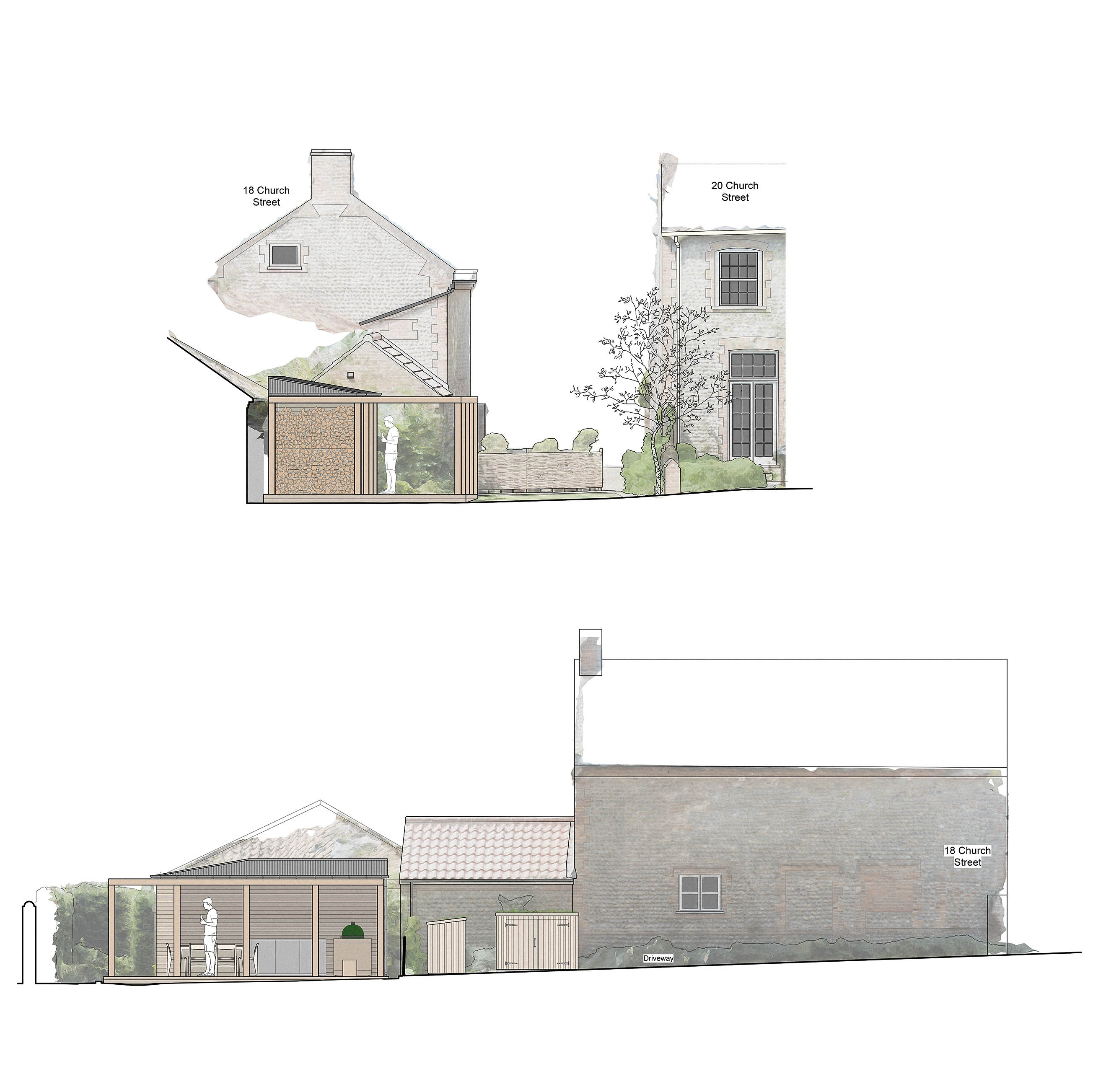
Alongside the internal updates, the proposal includes a modest garden outbuilding that provides covered outdoor seating, an outdoor kitchen, and integrated firewood storage. The structure reuses the footprint of the former shed and is designed to settle naturally into the rural setting.
Targeted conservation works address long-term deterioration to the gable ends and chimney plinth, replacing failed cementitious repairs with lime-based repointing and locally sourced reclaimed brick where needed.
Church Farmhouse is a Grade II listed Georgian property at the centre of Southrepps’ historic core, surrounded by a cluster of significant agricultural and ecclesiastical buildings. This project focused on updating key living spaces and carrying out essential conservation works.
The internal alterations centred on improving day-to-day functionality while keeping historic fabric loss to an absolute minimum. The kitchen, pantry, and utility rooms, housed in the 19th-century rear addition, are reorganised to make better use of the vaulted spaces. The shared family bathroom is reconfigured to create a more practical layout, and the conversion of the fifth bedroom into an en-suite for the principal bedroom resolves long-standing amenity shortcomings.
Alongside the internal updates, the proposal includes a modest garden outbuilding that provides covered outdoor seating, an outdoor kitchen, and integrated firewood storage. The structure reuses the footprint of the former shed and is designed to settle naturally into the rural setting.
Targeted conservation works address long-term deterioration to the gable ends and chimney plinth, replacing failed cementitious repairs with lime-based repointing and locally sourced reclaimed brick where needed.
Church Farmhouse is a Grade II listed Georgian property at the centre of Southrepps’ historic core, surrounded by a cluster of significant agricultural and ecclesiastical buildings. This project focused on updating key living spaces and carrying out essential conservation works.
The internal alterations centred on improving day-to-day functionality while keeping historic fabric loss to an absolute minimum. The kitchen, pantry, and utility rooms, housed in the 19th-century rear addition, are reorganised to make better use of the vaulted spaces. The shared family bathroom is reconfigured to create a more practical layout, and the conversion of the fifth bedroom into an en-suite for the principal bedroom resolves long-standing amenity shortcomings.
Alongside the internal updates, the proposal includes a modest garden outbuilding that provides covered outdoor seating, an outdoor kitchen, and integrated firewood storage. The structure reuses the footprint of the former shed and is designed to settle naturally into the rural setting.
Targeted conservation works address long-term deterioration to the gable ends and chimney plinth, replacing failed cementitious repairs with lime-based repointing and locally sourced reclaimed brick where needed.
© 2025 Thomas Ewing. All rights reserved.
© 2025 Thomas Ewing. All rights reserved.