Thomas Ewing
Architecture + Design
Thomas Ewing
Architecture + Design
Thomas Ewing
Architecture + Design


Woodgate Farmhouse
Location: Aylsham, Norfolk
Role: Principle Designer + Heritage Consultant
Stage/Service: Survey, Planning Permission, Listed Building Consent
Typology: Grade II Listed, Georgian Farmhouse
Scale: 284m²
Year/Status: 2025 - Ongoing
Woodgate Farmhouse
Location: Aylsham, Norfolk
Role: Principle Designer + Heritage Consultant
Stage/Service: Survey, Planning Permission, Listed Building Consent
Typology: Grade II Listed, Georgian Farmhouse
Scale: 284m²
Year/Status: 2025 - Ongoing
Woodgate Farmhouse
Location: Aylsham, Norfolk
Role: Principle Designer + Heritage Consultant
Stage/Service: Survey, Planning Permission, Listed Building Consent
Typology: Grade II Listed, Georgian Farmhouse
Scale: 284m²
Year/Status: 2025 - Ongoing
Woodgate Farmhouse
Location: Aylsham, Norfolk
Role: Principle Designer + Heritage Consultant
Stage/Service: Survey, Planning Permission, Listed Building Consent
Typology: Grade II Listed, Georgian Farmhouse
Scale: 284m²
Year/Status: 2025 - Ongoing
Woodgate Farmhouse
Location: Aylsham, Norfolk
Role: Principle Designer + Heritage Consultant
Stage/Service: Survey, Planning Permission, Listed Building Consent
Typology: Grade II Listed, Georgian Farmhouse
Scale: 284m²
Year/Status: 2025 - Ongoing
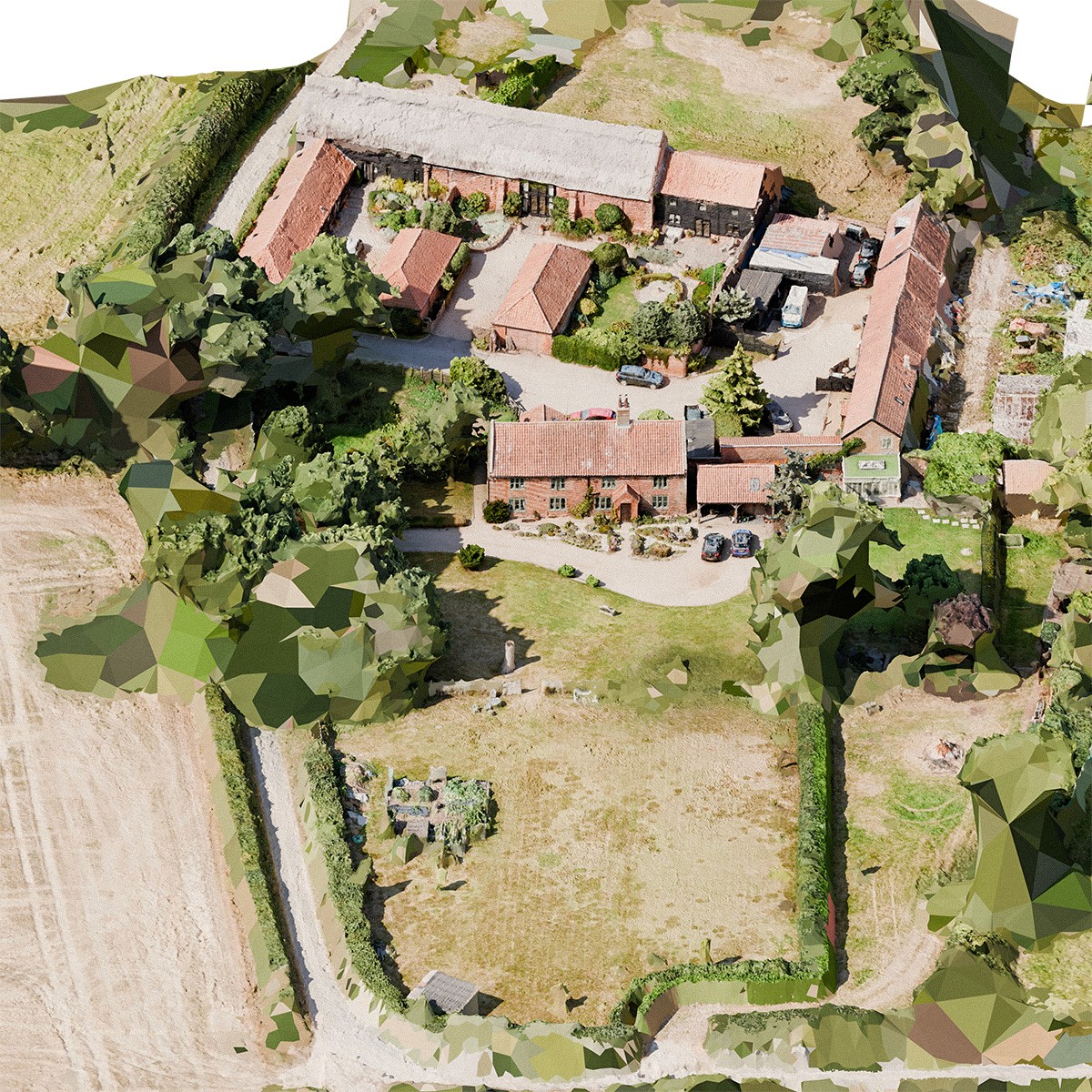
Woodgate Farmhouse is a Grade II listed Georgian property set within a cluster of former agricultural structures west of Aylsham. The project focuses on removing modern poor-quality alterations, carrying out repairs, reinstating Georgian elements, and resolving long-standing performance issues.
The scheme replaces the existing “vernacular revival” front door with a period appropriate four-panel Georgian door. Defective brickwork, dropped arches, and hard cement patches across the elevations are to be cut out and replaced, and non-breathable render to be removed to reinstate proper moisture movement. Two conservation rooflights are to be installed on the north roof slope to make the attic usable without disrupting the principal elevation.
Internally, the proposal strips out unsympathetic 20th-century interventions, including plywood panelling, cement-bedded hearths, gypsum skim, and plastic wall sheeting that has caused plaster decay. Lime plaster is to be reinstated across the external walls and internal partitions. The two later fireplace surrounds are to be removed and replaced with simple Georgian-appropriate treatments. Joinery repairs are to be carried out throughout on a like-for-like basis, and damaged floor finishes, including chipboard, vinyl, and plywood over-boarding, are replaced with appropriate timber, tile, or pamments. Bathrooms are to be fully refurbished, and the attic is to receive targeted insulation and background ventilation to improve efficiency without compromising historic fabric.
The overall approach is corrective and restorative rather than transformative: removing inappropriate modern work, reinstating forms and materials consistent with the building’s age, improving environmental performance, and addressing structural defects that undermine the long-term condition of the farmhouse.
Woodgate Farmhouse is a Grade II listed Georgian property set within a cluster of former agricultural structures west of Aylsham. The project focuses on removing modern poor-quality alterations, carrying out repairs, reinstating Georgian elements, and resolving long-standing performance issues.
The scheme replaces the existing “vernacular revival” front door with a period appropriate four-panel Georgian door. Defective brickwork, dropped arches, and hard cement patches across the elevations are to be cut out and replaced, and non-breathable render to be removed to reinstate proper moisture movement. Two conservation rooflights are to be installed on the north roof slope to make the attic usable without disrupting the principal elevation.
Internally, the proposal strips out unsympathetic 20th-century interventions, including plywood panelling, cement-bedded hearths, gypsum skim, and plastic wall sheeting that has caused plaster decay. Lime plaster is to be reinstated across the external walls and internal partitions. The two later fireplace surrounds are to be removed and replaced with simple Georgian-appropriate treatments. Joinery repairs are to be carried out throughout on a like-for-like basis, and damaged floor finishes, including chipboard, vinyl, and plywood over-boarding, are replaced with appropriate timber, tile, or pamments. Bathrooms are to be fully refurbished, and the attic is to receive targeted insulation and background ventilation to improve efficiency without compromising historic fabric.
The overall approach is corrective and restorative rather than transformative: removing inappropriate modern work, reinstating forms and materials consistent with the building’s age, improving environmental performance, and addressing structural defects that undermine the long-term condition of the farmhouse.
Woodgate Farmhouse is a Grade II listed Georgian property set within a cluster of former agricultural structures west of Aylsham. The project focuses on removing modern poor-quality alterations, carrying out repairs, reinstating Georgian elements, and resolving long-standing performance issues.
The scheme replaces the existing “vernacular revival” front door with a period appropriate four-panel Georgian door. Defective brickwork, dropped arches, and hard cement patches across the elevations are to be cut out and replaced, and non-breathable render to be removed to reinstate proper moisture movement. Two conservation rooflights are to be installed on the north roof slope to make the attic usable without disrupting the principal elevation.
Internally, the proposal strips out unsympathetic 20th-century interventions, including plywood panelling, cement-bedded hearths, gypsum skim, and plastic wall sheeting that has caused plaster decay. Lime plaster is to be reinstated across the external walls and internal partitions. The two later fireplace surrounds are to be removed and replaced with simple Georgian-appropriate treatments. Joinery repairs are to be carried out throughout on a like-for-like basis, and damaged floor finishes, including chipboard, vinyl, and plywood over-boarding, are replaced with appropriate timber, tile, or pamments. Bathrooms are to be fully refurbished, and the attic is to receive targeted insulation and background ventilation to improve efficiency without compromising historic fabric.
The overall approach is corrective and restorative rather than transformative: removing inappropriate modern work, reinstating forms and materials consistent with the building’s age, improving environmental performance, and addressing structural defects that undermine the long-term condition of the farmhouse.
© 2025 Thomas Ewing. All rights reserved.
© 2025 Thomas Ewing. All rights reserved.